

My husband Arnold and I visited Rome in the final years of the 20th century and now in the 21st century I am revisiting the tissue -wrapped drawings I created in Italy. It isn’t really that surprising to me, to find the black and white drawings have evolved into time-travelling machines. I am transported back to Italia, where history merges seamlessly with the present day.

Above: Street scene – pen on paper.
Arnold and I start at the Roman railway station where we find a taxi to take us to the Piccolo Hotel which turns out to be just around the corner from the Plaza dei Fiori, the Square of Flowers. This is a real find. First for being a fruit market and secondly, for its history. A bronze statue of Dominican monk, mathematician and astrologer Bruno makes a very mysterious figure upon a lofty pedestal situated on the site of his flaming death. He had been burnt for his ideas of planetary movement which did not fit with the Vatican’s teachings.

Above: Piazza dei Fiori, the Square of Flowers – marker pen on paper.
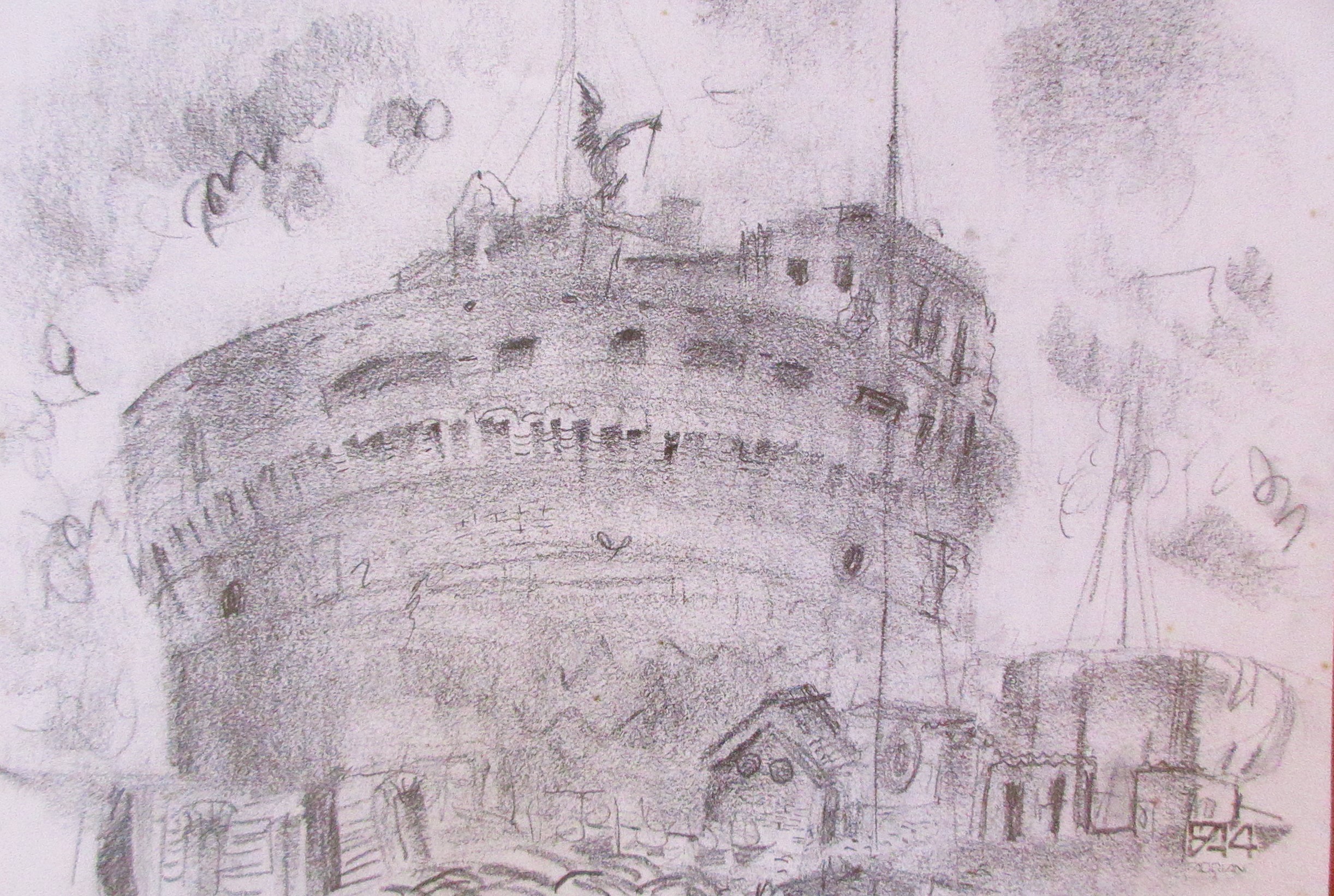
The architecture of the city is impressive and yet welcoming because it is so well proportioned; but then the very famous architect Vitruvius designed much of it including Castel Sant’Angelo (below) in the 1st century under Caesar Augustus.
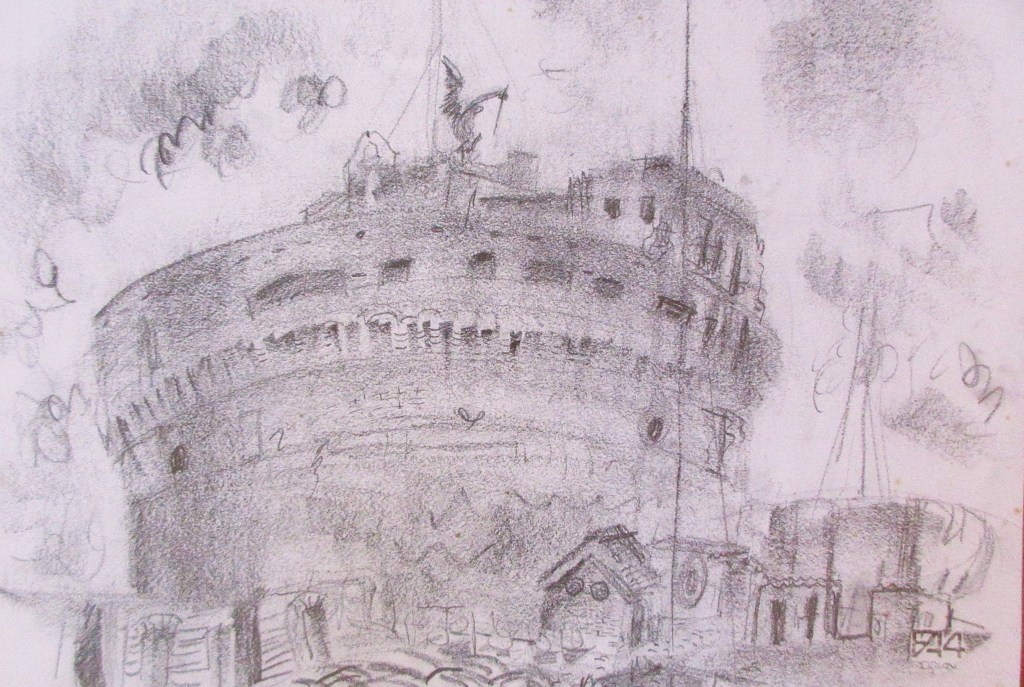
Above: Castel Sant ‘Angelo, mausoleum of Hadrian – charcoal.
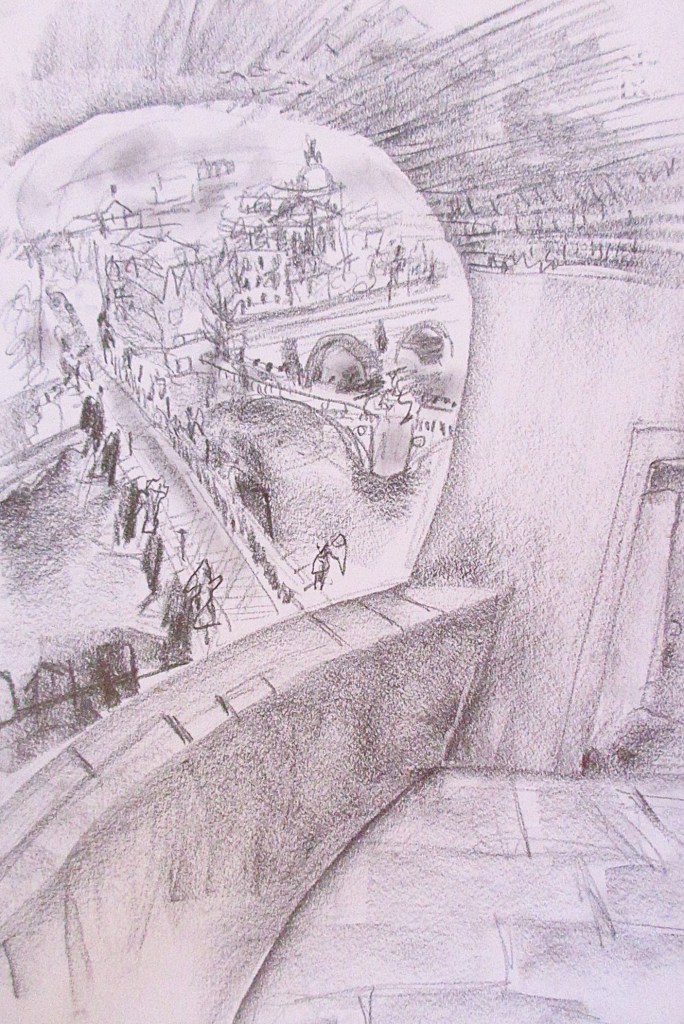
Above: Inside Castel Sant ‘Angelo with the Ponte Sant ‘Angelo below – charcoal.
No lesser artist and architect designed the Colonnade of St Peters than Bernini in the 17th century, after St Peters had been finished. I sit under one of those columns and draw.
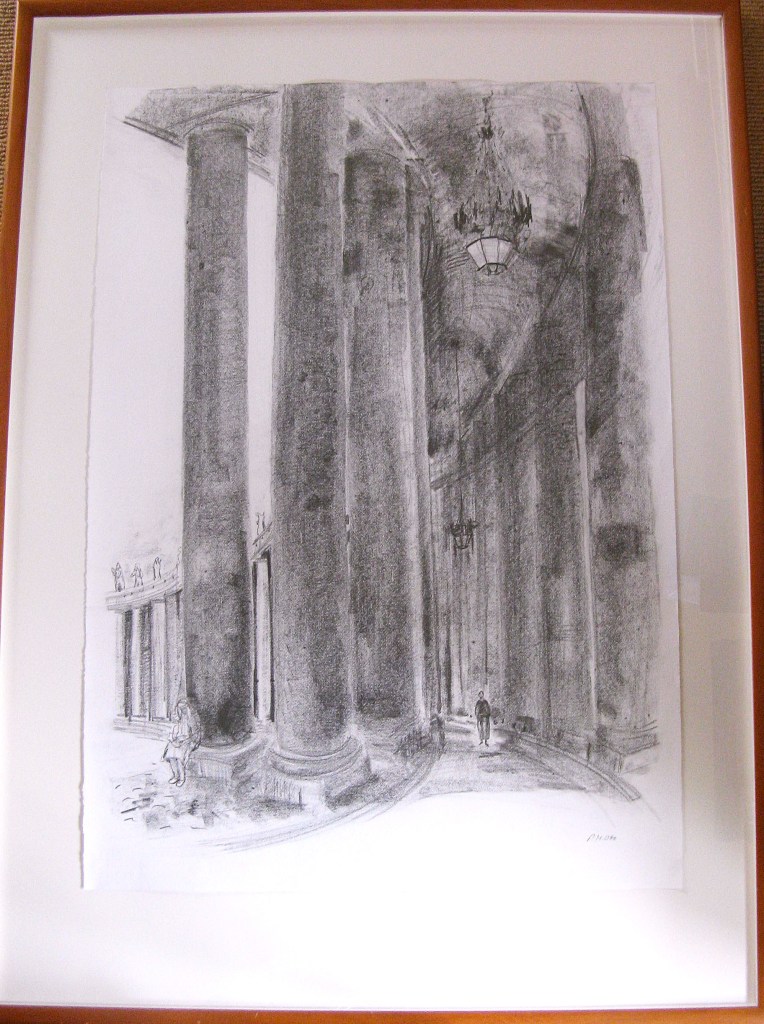
Above: St Peters colonnade – charcoal
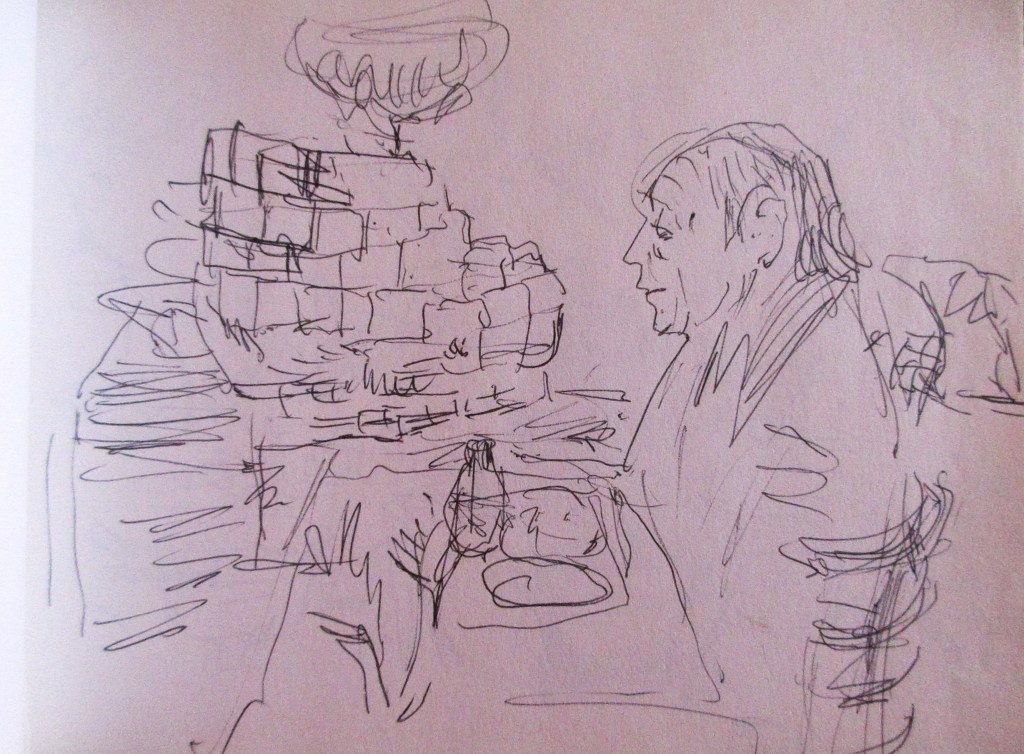
A quick sketch of a fellow diner as we recover from our explorations.
.
Above: At the railway station eatery – pen on paper

Above: Rome’s Trevi Fountain – marker pen and watercolour
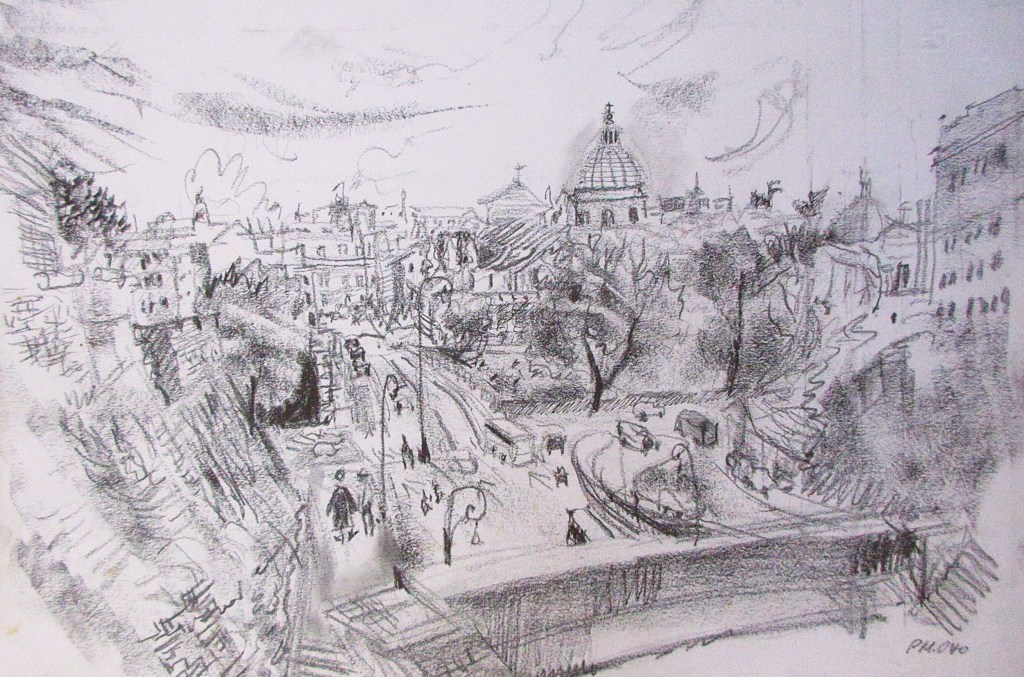
Above: Bridges in Rome – In the distance is the dome of St Peters designed by Michelangelo: charcoal on paper
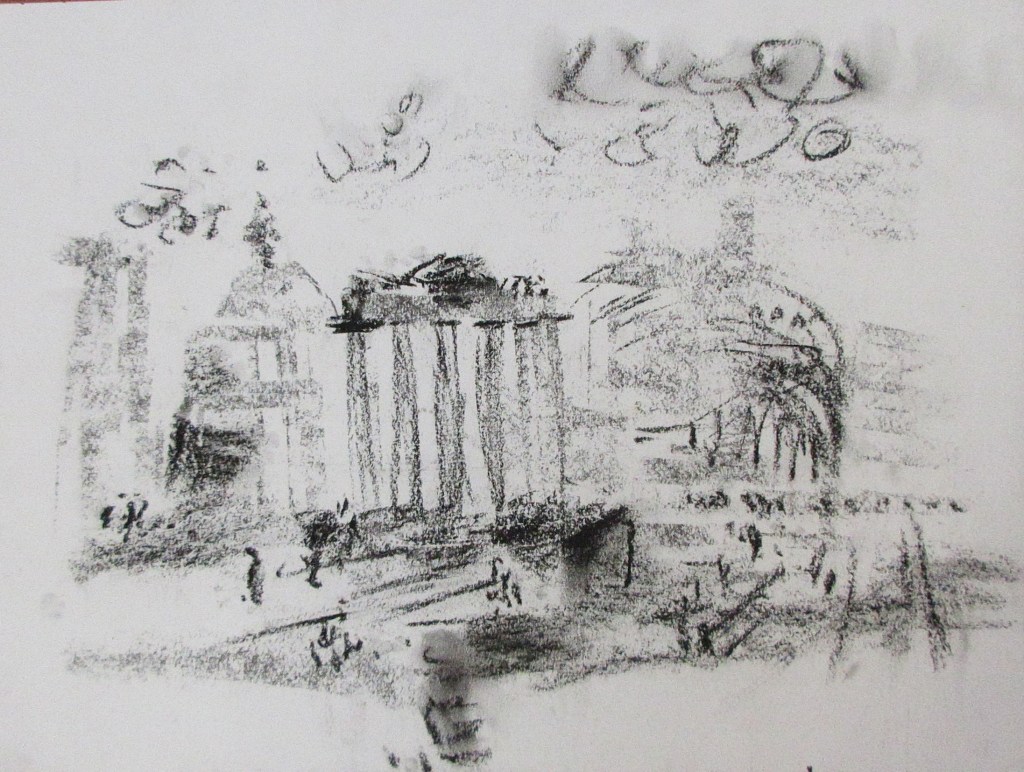
Above: The Forum with its still elegant ruins.

Above: Vatican in Rome – pen on paper
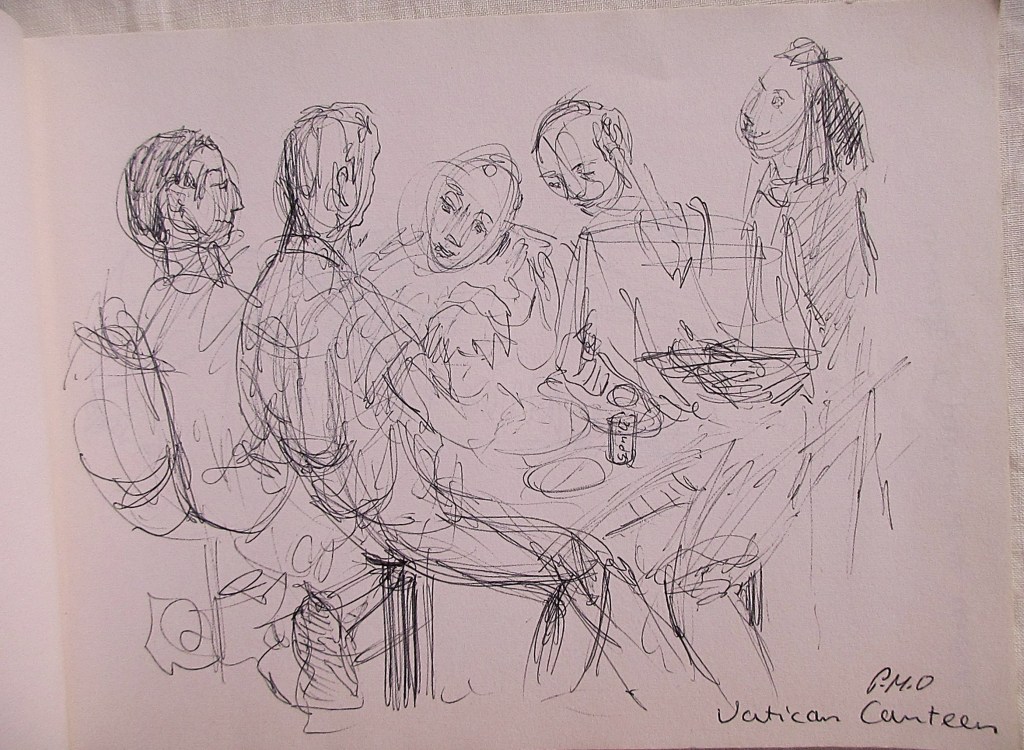
Above: The Vatican canteen – pen on paper
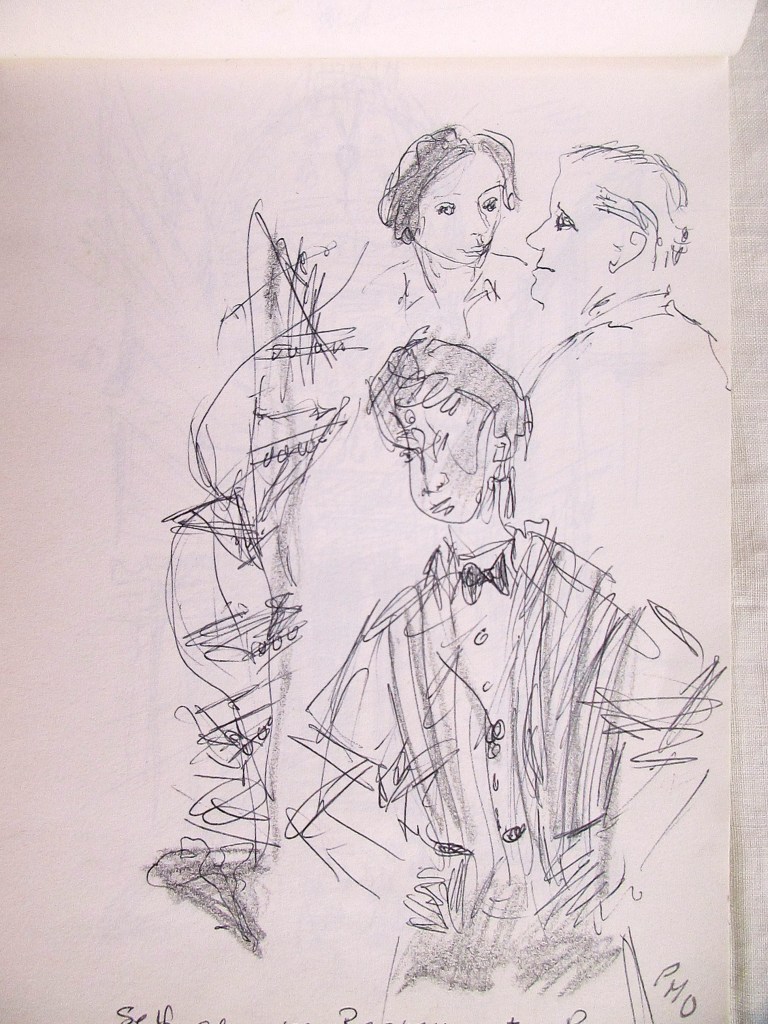
Above: Self-help ristorante
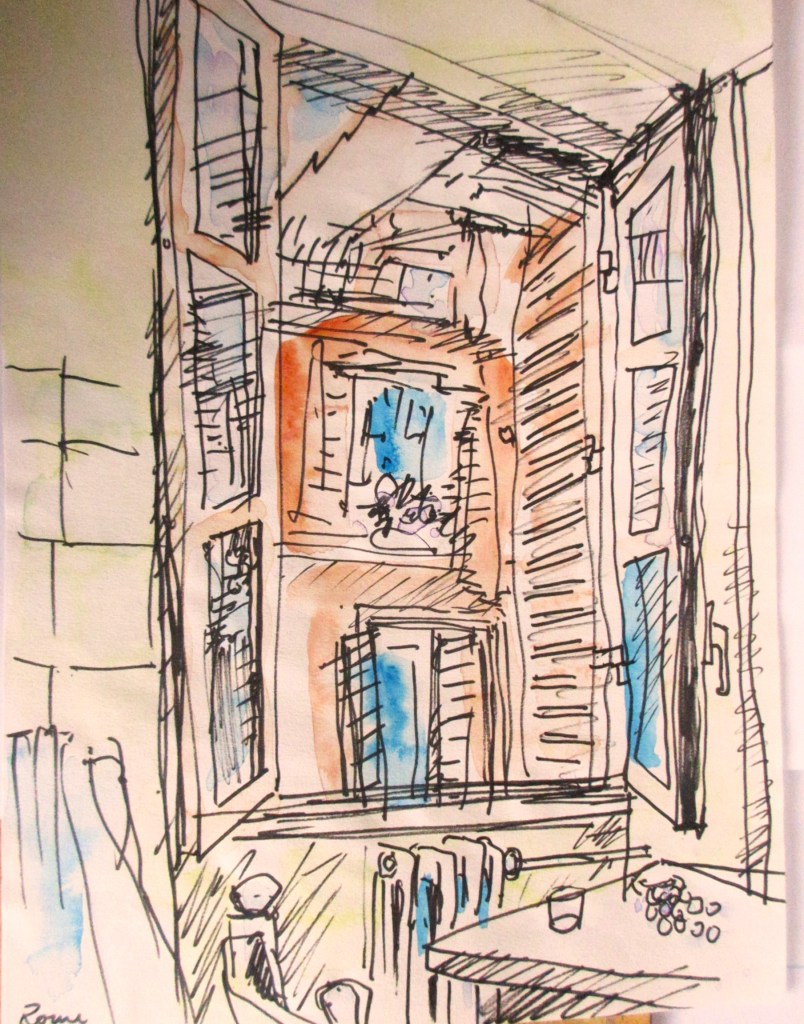
Above: Hotel window – pen and watercolour

Feeding pigeons in Rome.
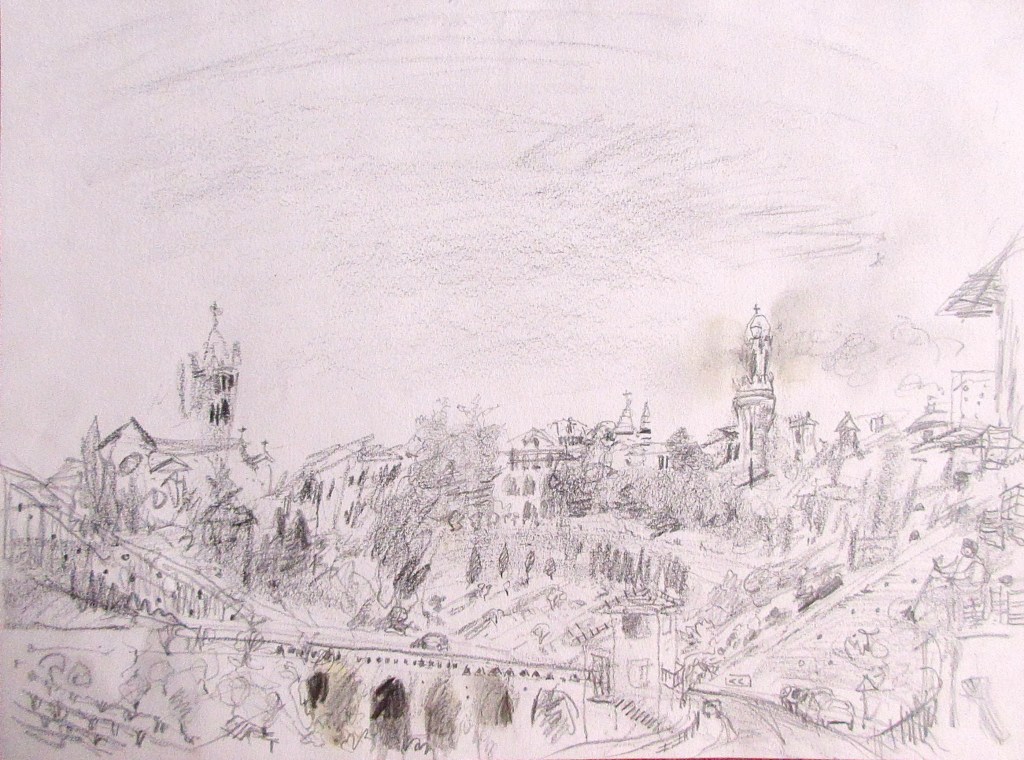
Above: Italian railway
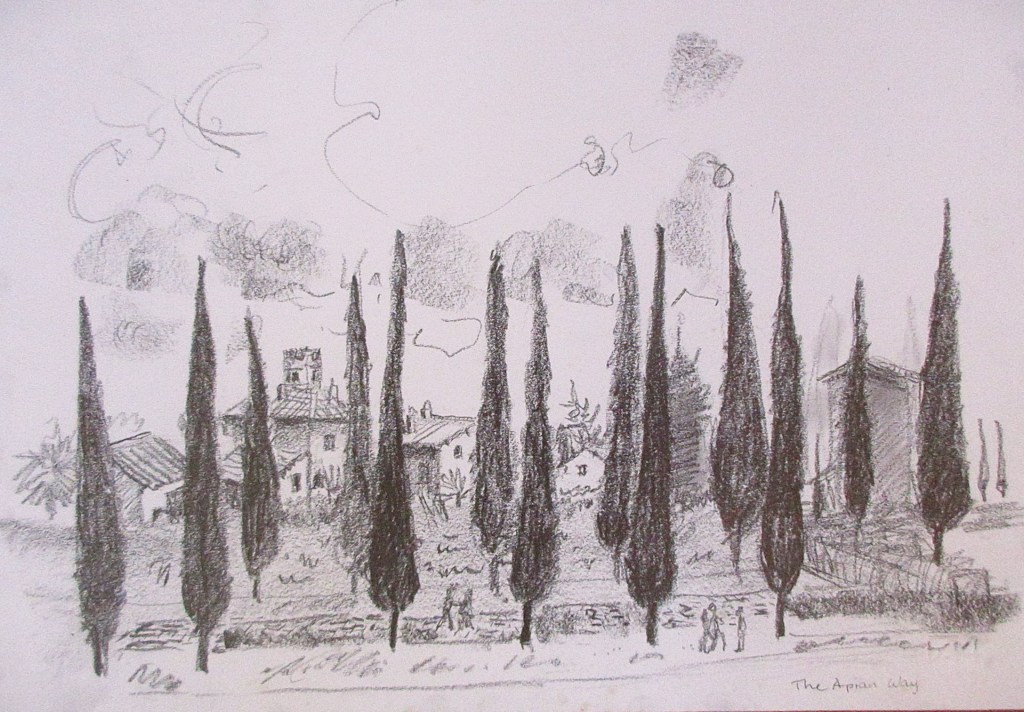
Above: The Appian Way
The Appian Way is one of the earliest and strategically most important Roman Roads. What was that saying, “all roads lead to Rome”.
It has been a happy experience revisiting the Roman city (named after Romulus). I am showing these drawings, most for the first time. They have been uncovered from sketch books, diaries, scraps of paper. I hope they may have brought back memories for anyone else as lucky as I, to have visited Italia. Arrivederci!
 Penny Otto
Leave a comment